
5 Weeks in Chugoku and Shikoku, Japan: Exploring Japan Beyond the Tourist Trail
From Hiroshima to the remote corners of western Japan, here’s our five-week journey through nine prefectures, incredible local food, ancient traditions, and the Japan that many travellers miss.
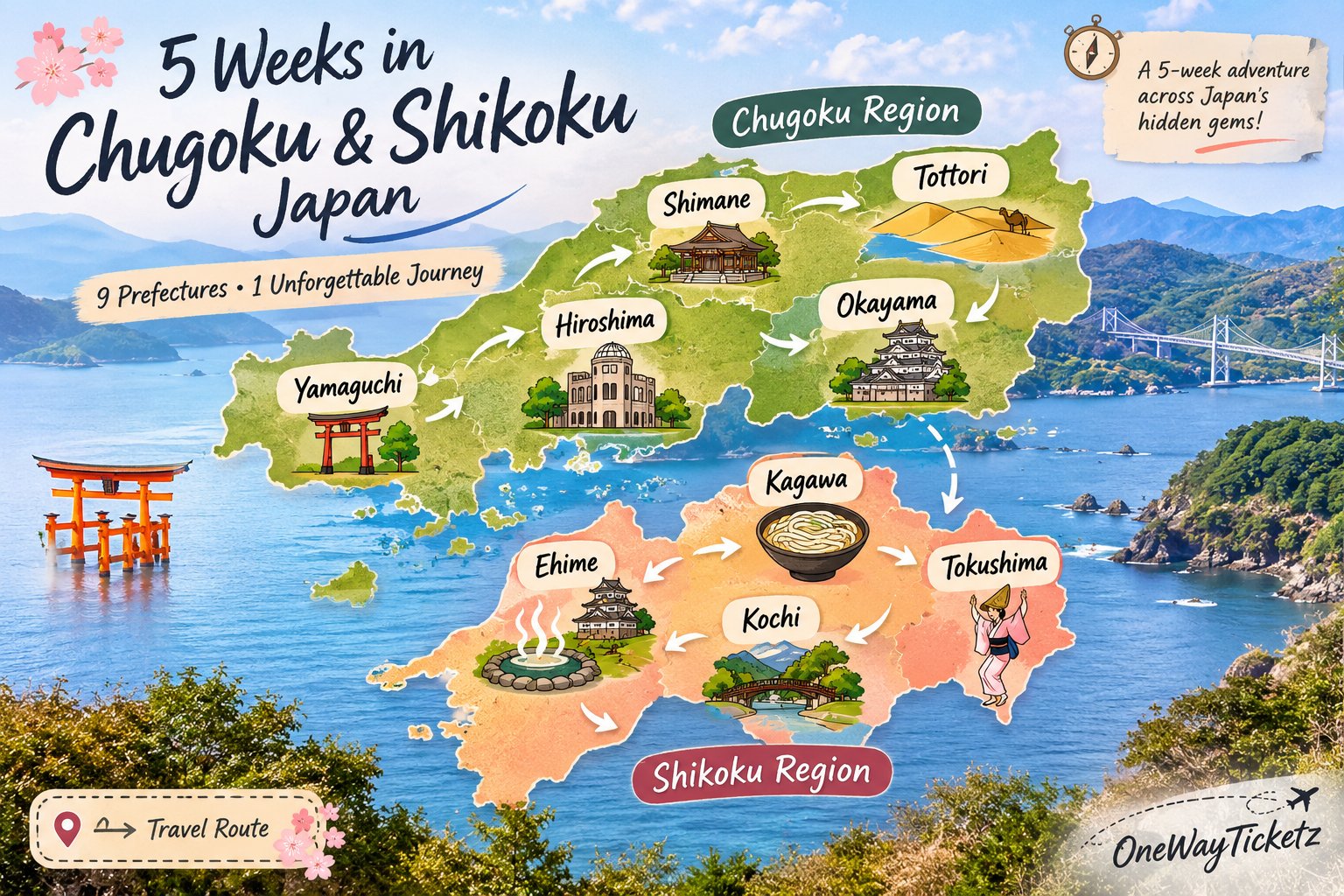
Introduction: Five Weeks in Japan’s Lesser-Explored Regions
When people think of travelling to Japan, Tokyo, Osaka, and Kyoto usually steal the spotlight. But what if some of the most memorable Japanese experiences lie beyond these familiar destinations?
From late October to the end of November, I spent five weeks exploring Chugoku and Shikoku, two regions in western Japan that deserve far more love from travellers like us.
Autumn was a wonderful time to visit. The weather was generally cool and comfortable for exploring, with crisp mornings, pleasant afternoons, and autumn foliage that we were hoping to see across the countryside. We planned this trip nearly 6 months in advance, and were caught by surprise with the unfortunate news that autumn came earlier than expected. We ended up missing the peak foliages by a couple of days in every prefecture we went to. The good side to this was that temperatures were still very comfortable during this period. A jacket was essential, especially in the evenings or when you explore the mountaineous areas. Rainy days were possible too, but it was quite a light drizzle each time we encountered it so that never stopped us from exploring!
Our journey began in Hiroshima, took us through all five prefectures of Chugoku, and continued across the four prefectures of Shikoku before bringing us back to Hiroshima.
Nine prefectures, five weeks, and countless bowls of delicious local food later, we came away with a much deeper appreciation of Japan beyond its famous tourist cities.
So, if you’re wondering what to do in Chugoku and Shikoku, here’s a little introduction to the places that made up our journey!
1. Chugoku Travel: Exploring Hiroshima, Yamaguchi, Shimane, Tottori and Okayama
Located in western Honshu, the Chugoku region is a fascinating mix of coastal scenery, historic towns, sacred sites, and rural landscapes. It’s also home to two UNESCO World Heritage Sites in Hiroshima and Shimane, making it a rewarding destination for history and culture lovers.
We started in Hiroshima before making our way west and then exploring the prefectures further east.
Hiroshima: A City of Peace, History and Comfort Food
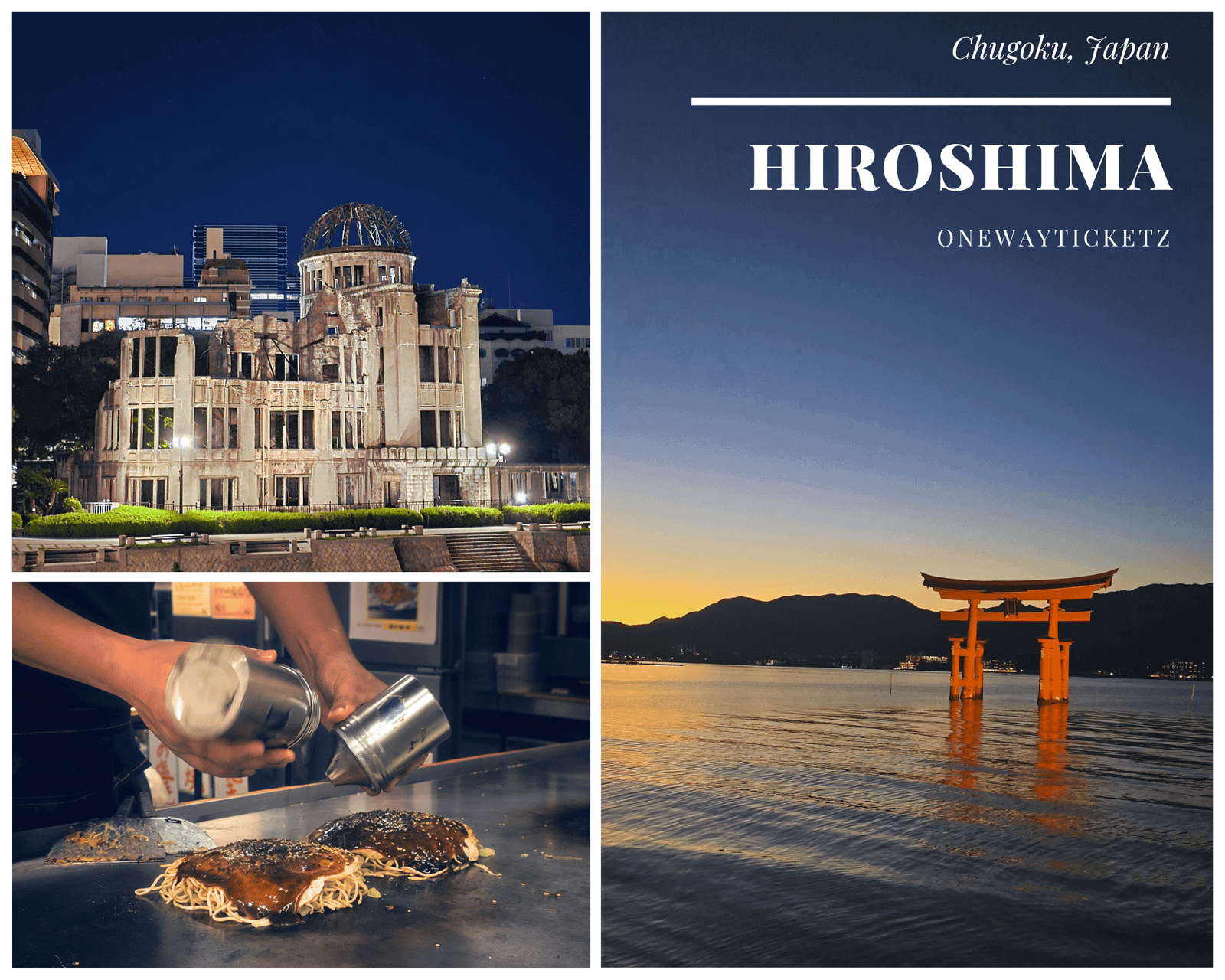
Hiroshima was our starting point and the gateway to our Chugoku adventure.
The city is best known internationally for the Hiroshima Peace Memorial Park and Atomic Bomb Dome, both important places to learn about the city’s history and its enduring message of peace. Just a short ferry ride away, Miyajima Island is home to the iconic Itsukushima Shrine. It is famous for its striking red torii gate that appears to float on the water. It was really breathtaking to finally see it in person after having only seen it in pictures for the longest time ever,
And, of course, there’s the food!
Make sure you try the Hiroshima-style okonomiyaki, a savoury layered pancake packed with cabbage, noodles, and other toppings. Don’t forget the local oysters and momiji manju, maple-leaf-shaped cakes that make excellent snacks too. If you’re a fan of Japanese sake like I am, then don’t miss out the Saijio sake brewery street! It is one of Japan’s top three premier sake-brewing regions and you’ll get to try many delicious sake along the way.
Yamaguchi: Coastal Views, Caves and Samurai History
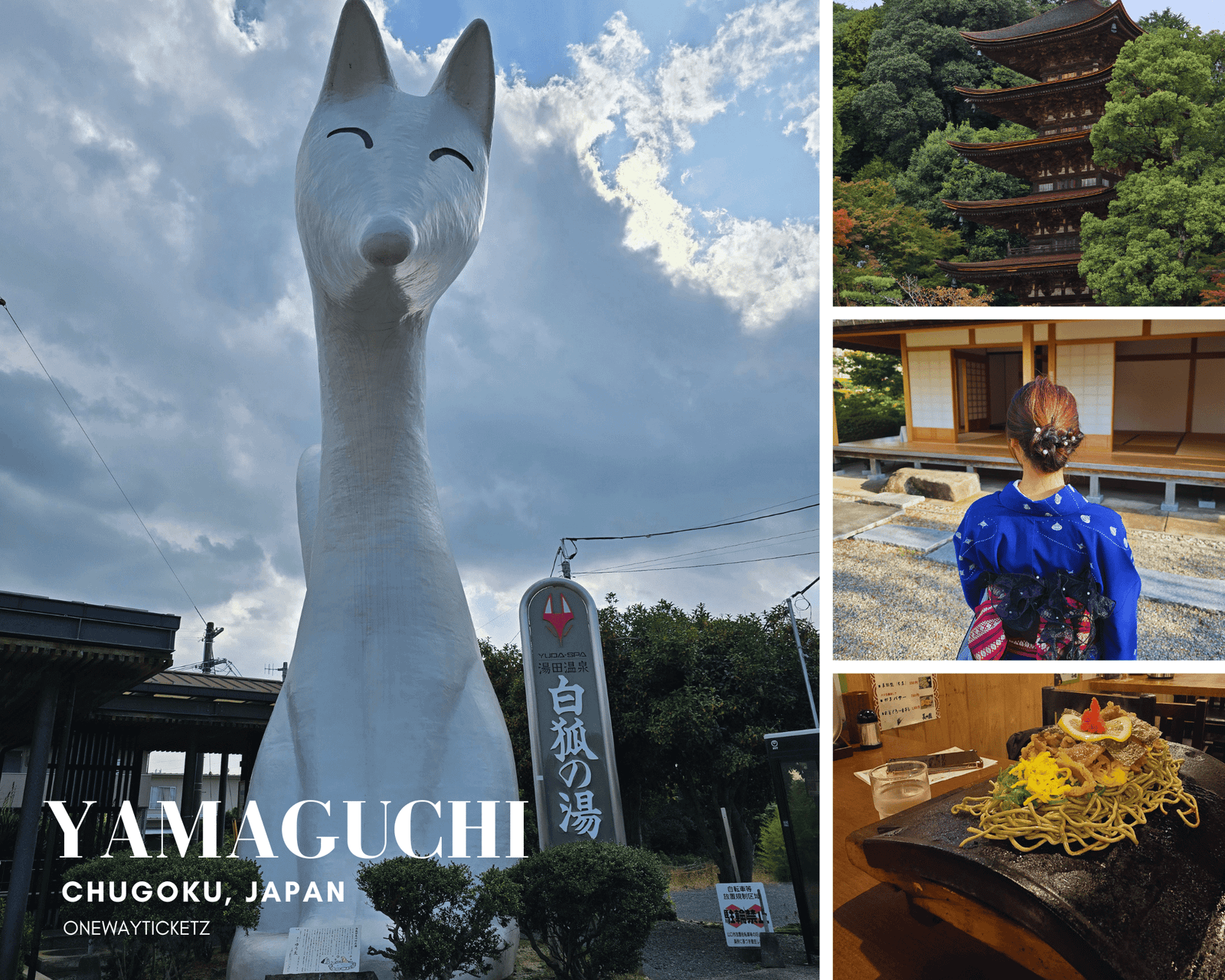
Heading west, Yamaguchi offers a quieter side of Japan, with dramatic coastlines, historic towns, and plenty of natural beauty.
We kicked off our Yamaguchi adventure with two blissful nights at Yuda Onsen, soaking away our travel fatigue in the soothing hot springs. Honestly, what better way to recharge before exploring more of Japan?
Next, we visited Rurikoji Temple, home to a stunning five-storied pagoda recognised as a National Treasure of Japan. The pagoda is also celebrated as one of Japan’s three great examples of its kind, alongside those at Horyuji Temple near Nara and Daigoji Temple in Kyoto.
But our Yamaguchi experience wasn’t just about sightseeing! We also got to dress up in traditional kimonos and stroll through the charming little onsen town. Thanks to a Japanese cultural experience organised by a local operator, LAWAKU, we even tried making traditional Japanese sweets (和菓子, wagashi) and took part in a Japanese tea ceremony. It was such a lovely way to experience Japanese culture beyond the usual tourist attractions!
Also, keep a look out for Kawara Soba in Yamaguchi, a green-tea noodles served with toppings on a sizzling hot roof tile. It was such an interesting sight, and also as fun to eat as it sounds!
Shimane: Ancient Shrines and Mythical Japan
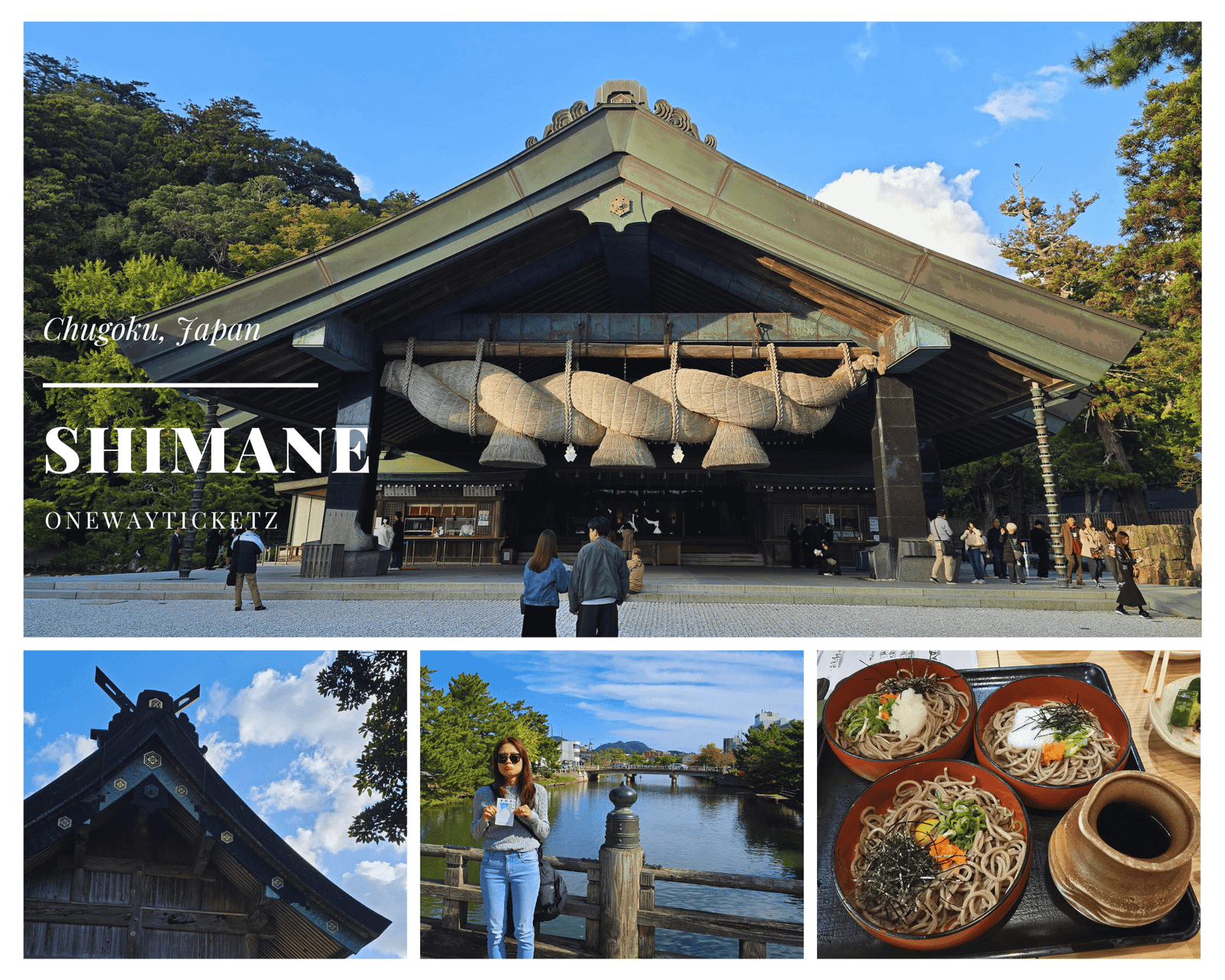
Shimane feels like stepping into another side of Japanese history, where ancient mythology and everyday life are closely intertwined.
Its biggest draw is Izumo Taisha, one of Japan’s most important Shinto shrines, traditionally associated with matchmaking and relationships. The region is also home to Iwami Ginzan Silver Mine, a UNESCO World Heritage Site that offers a glimpse into Japan’s silver-mining history. Though we didn’t have the time for it this round, I would recommend going for it if your itinerary allows!
If you’re looking for a slower pace of travel, Shimane is a wonderful place to wander through historic streets and soak up the lakeside scenery around Matsue Castle and the Samurai District.
Here’s a fun little activity to add to your itinerary: collect stamps from five historic spots around the area to complete your very own Matsue Castle postcard! It sounds like a lovely souvenir, right?
Well, a little word of advice from someone who learnt the hard way: check the opening days before you go, especially around public holidays! We had absolutely no luck completing our postcard because two of the stops were closed. To make matters worse, we could only stare longingly at the stamps through the glass doors. So close, yet so far!
Food-wise, try the Izumo soba, a local buckwheat noodle speciality with a distinctive flavour and serving style. I really liked it in particular because of its light taste and it goes well with other side dishes easily too.
Tottori: Sand Dunes, Coastal Scenery and Unexpected Adventures
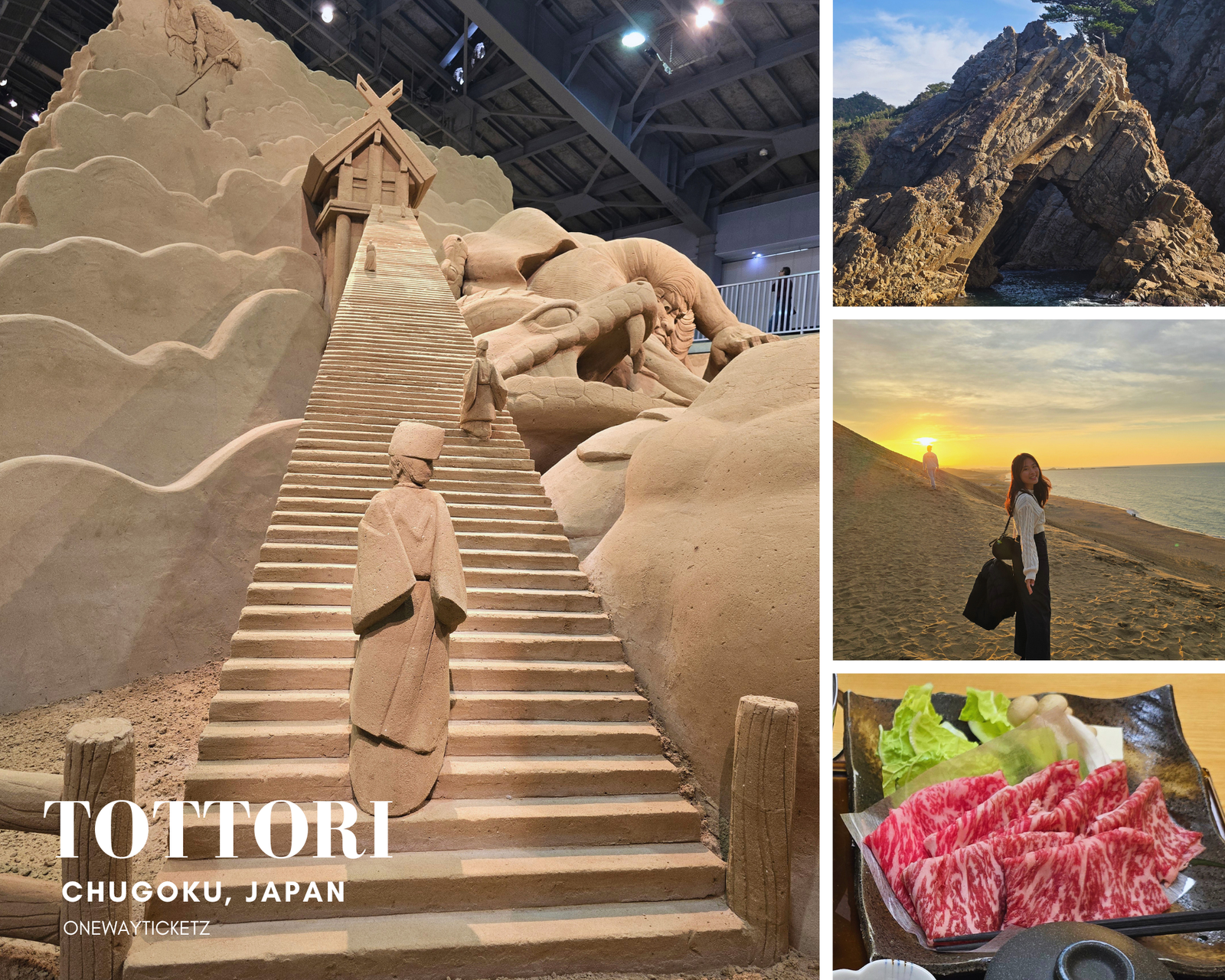
Who knew Japan had sand dunes?
Tottori is famous for the Tottori Sand Dunes, an impressive stretch of sand overlooking the Sea of Japan. The landscape feels completely different from the temples, forests, and bustling cities that many associate with Japan. We also went to the Tottori Sand Museum when it was exhibiting their 16th Exhibition “Travel around the World in Sand, Japan”. I was in awe looking at the large scale of these sand sculptures!
Beyond the dunes, the prefecture offers beautiful coastal scenery, traditional hot springs, and Mount Daisen for nature lovers. Although we did not make it for a hike on Mount Daisen, we went on the relaxing Uradome coast island hopping pleasure boat to get a close-up view of the coast.
Tottori is famous for its juicy pears, fresh seafood, and delicious crab dishes. We even tried pear juice and pear liquor during our visit, and both struck a lovely balance between sweetness and refreshment!
But here’s a local speciality that might fly under your radar: Tottori Wagyu. While it may not enjoy the same international fame as Kobe Beef, Tottori has a proud cattle-breeding heritage and a reputation for producing exceptional Japanese Black Wagyu.
If you’re a beef lover, don’t miss the chance to try Tottori Wagyu shabu-shabu when you visit. The tender, melt-in-your-mouth beef made for such a satisfying meal that it absolutely made my night!
Okayama: Garden Strolls, Historic Streets and Art Islands
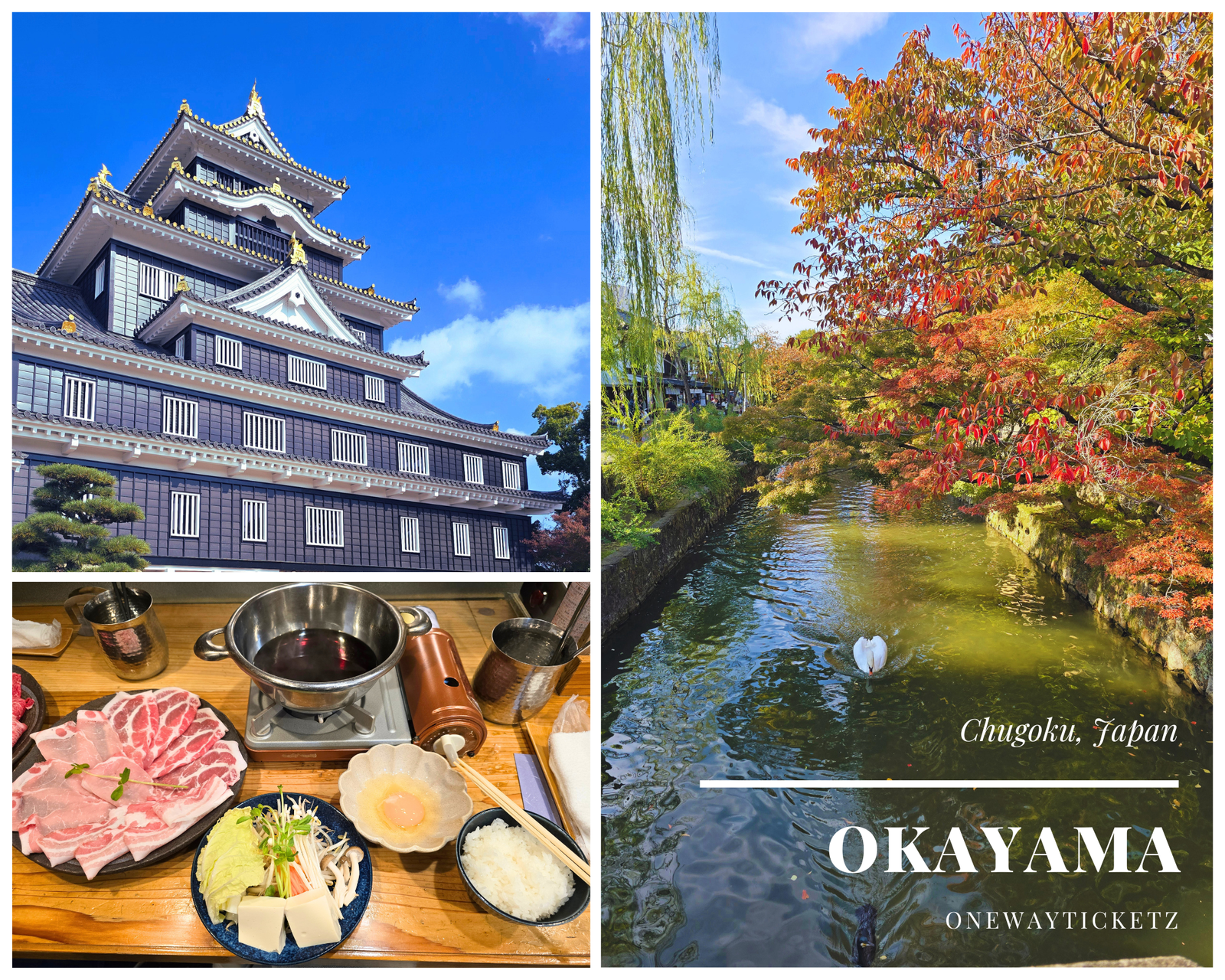
Our Chugoku journey continued to Okayama, a prefecture known for its pleasant climate, beautiful gardens, and connections to Japanese folklore.
One of its standout attractions is Korakuen Garden, considered one of Japan’s three great landscape gardens. Nearby Okayama Castle makes a lovely addition to a day of sightseeing.
Another highlight is Kurashiki’s historic Bikan Quarter, where traditional buildings and canals create an atmosphere that feels worlds away from Japan’s major cities. Art lovers can also venture to Naoshima, the celebrated island known for its contemporary art museums and installations.
And don’t leave Okayama without trying its famous fruit, especially its juicy peaches and muscat grapes! The prefecture is also home to some exceptional Wagyu beef, including Chiya Beef, a premium brand of Japanese Black cattle with a long history.
During our visit, we stumbled upon a popular sukiyaki restaurant specialising in Wagyu. The restaurant was fully booked, but the staff somehow managed to squeeze us in for a quick 45-minute lunch. And honestly? That meal turned out to be one of the most memorable of our entire five-week trip!
2. Shikoku Travel: Discovering Kagawa, Ehime, Kochi and Tokushima
After exploring Chugoku, we crossed into Shikoku, Japan’s smallest of its four main islands.
But don’t let its size fool you. Shikoku is packed with mountain landscapes, beautiful coastlines, historic temples, and a food culture worth travelling for. It’s also home to the famous Shikoku 88 Temple Pilgrimage, a traditional Buddhist pilgrimage route that circles the island.
For travellers wondering what to do in Shikoku, this region offers a wonderful mix of nature, spirituality, local traditions, and small-town charm.
Kagawa: Udon, Gardens and Contemporary Art
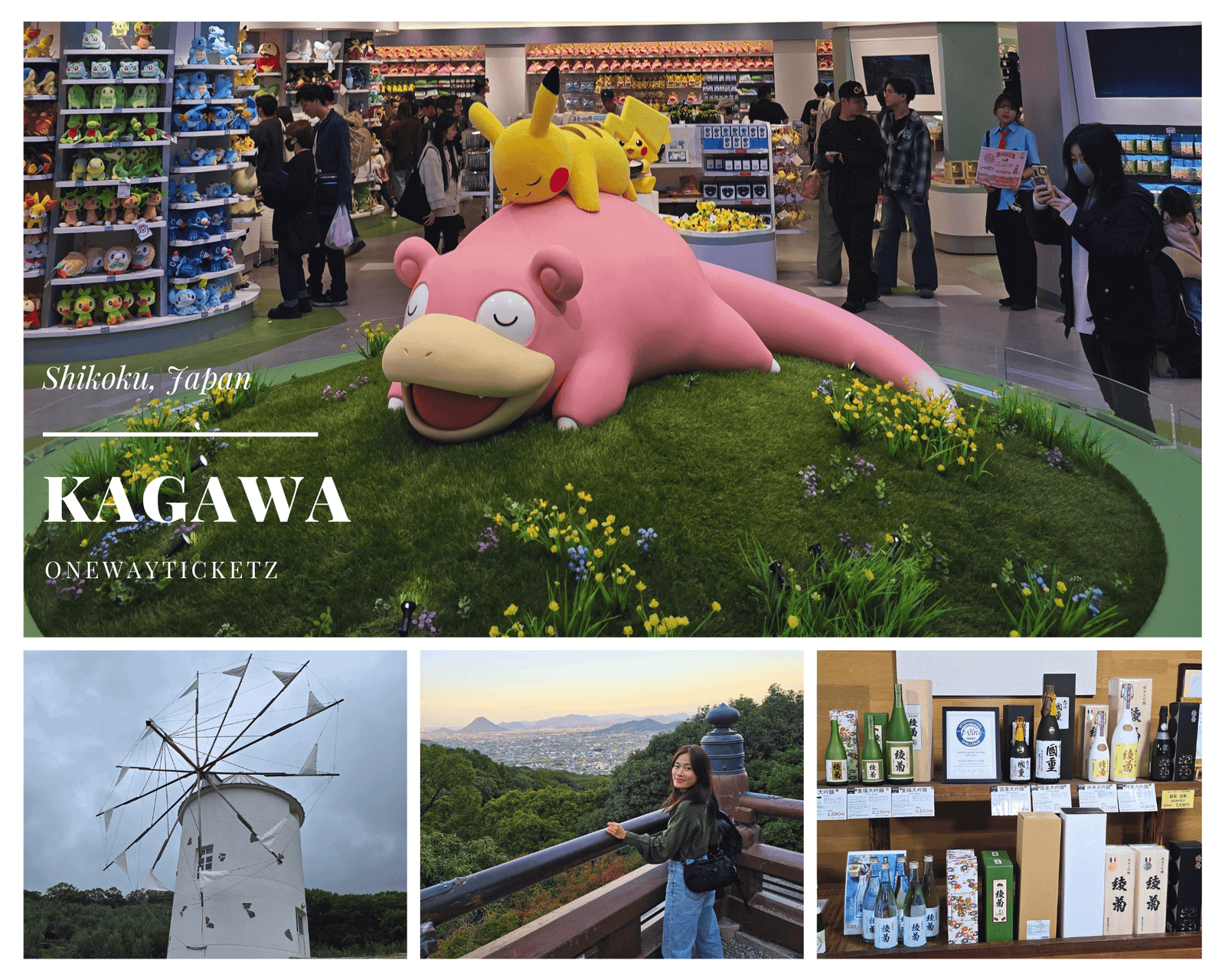
First up was Kagawa, Japan’s smallest prefecture by area and a dream destination for noodle lovers.
Kagawa is famous for Sanuki udon, thick and chewy wheat noodles that locals take very seriously. With so many udon shops around, you could practically build an entire itinerary around eating your way through the prefecture.
Beyond the noodles, visit Ritsurin Garden in Takamatsu for its beautifully landscaped grounds. If you are a pokemon fan, make sure you drop by the Pokemon Center Kagawa. You’ll see the cute slowpoke (Yadon) as the featured mascot, and even see one holding a bowl of udon as a nod to Kagawa’s famous noodle culture. I also visited the local Ayakiku Brewery for a brewery tour, and then to nearby Kotohira, which houses Shikoku’s most popular Shinto shrine dedicated to maritime safety and seafaring
Kagawa is proof that a small prefecture can offer a surprisingly big travel experience. We even made a day trip to Shōdoshima
Island by ferry, which was known for olives, the Angel Road and Kankakei Gorge. There was just so much to see with too little time to spare.
Ehime: Historic Hot Springs and Scenic Cycling Routes
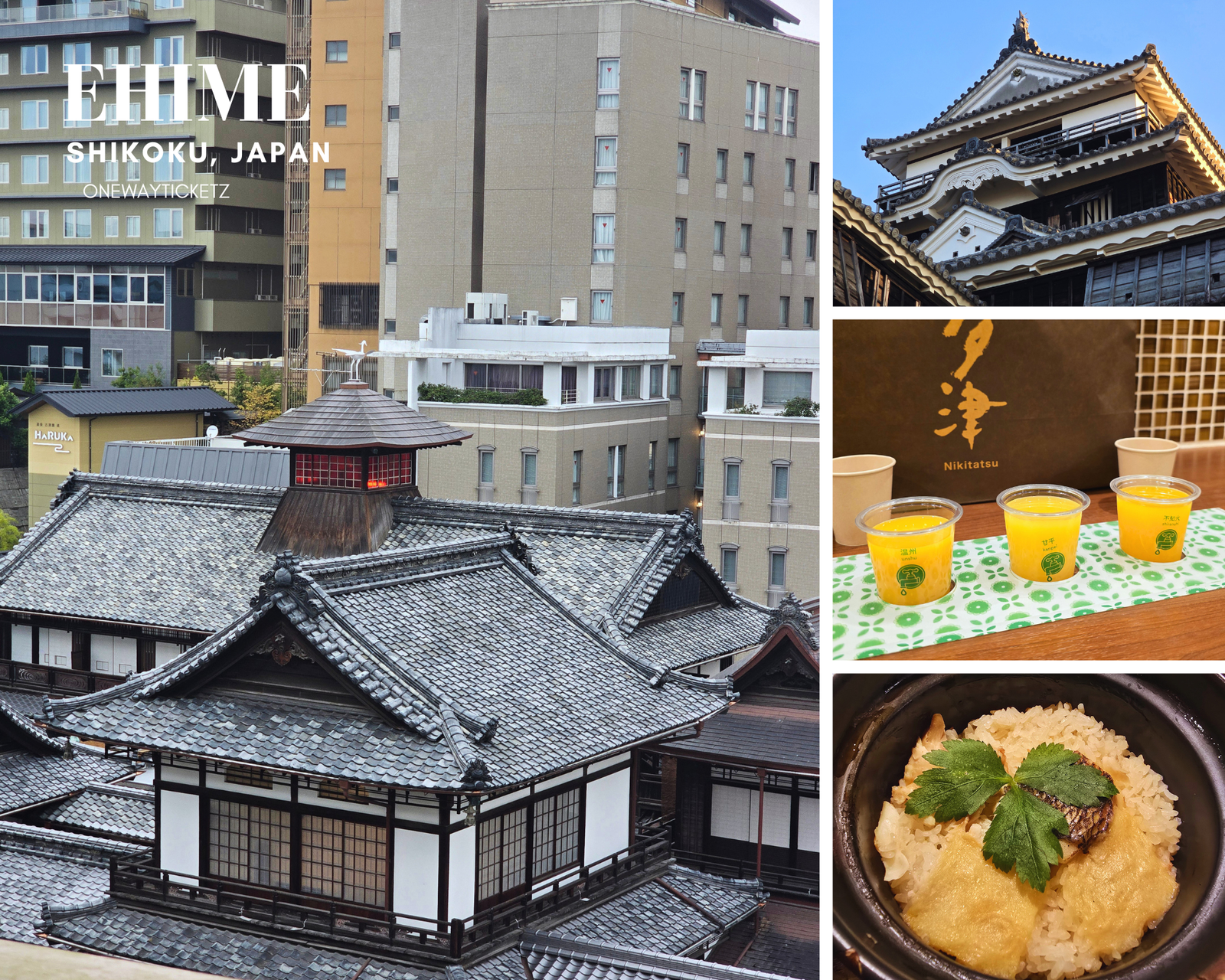
Next was Ehime, home to charming Matsuyama, historic castles, and the famous Dogo Onsen hot spring.
Dogo Onsen is widely regarded as one of Japan’s oldest hot springs. It has such a long history that makes bathing here feel like stepping into another era. Matsuyama Castle is also best known for being one of only twelve surviving original castle keeps in Japan that were built before the end of the Edo period and escaped post-feudal demolition.
Ehime is also a gateway to the Shimanami Kaido. It is a spectacular cycling route connecting islands across the Seto Inland Sea between Shikoku and Honshu. Even if you’re not an avid cyclist, the sea views and island scenery are worth exploring. This is definitely on my bucket list since we did not get a chance to do it this time round. I only managed to do a short drive between the islands on a day trip to Onomichi.
Food highlights include fresh seafood, the Botchan Dango and Ehime’s much-loved mikan mandarins. One of my favorites was also the Tai-meshi (sea bream rice) that was so comforting as an autumn meal.
Kochi: Nature, Seafood and a Laid-Back Local Culture
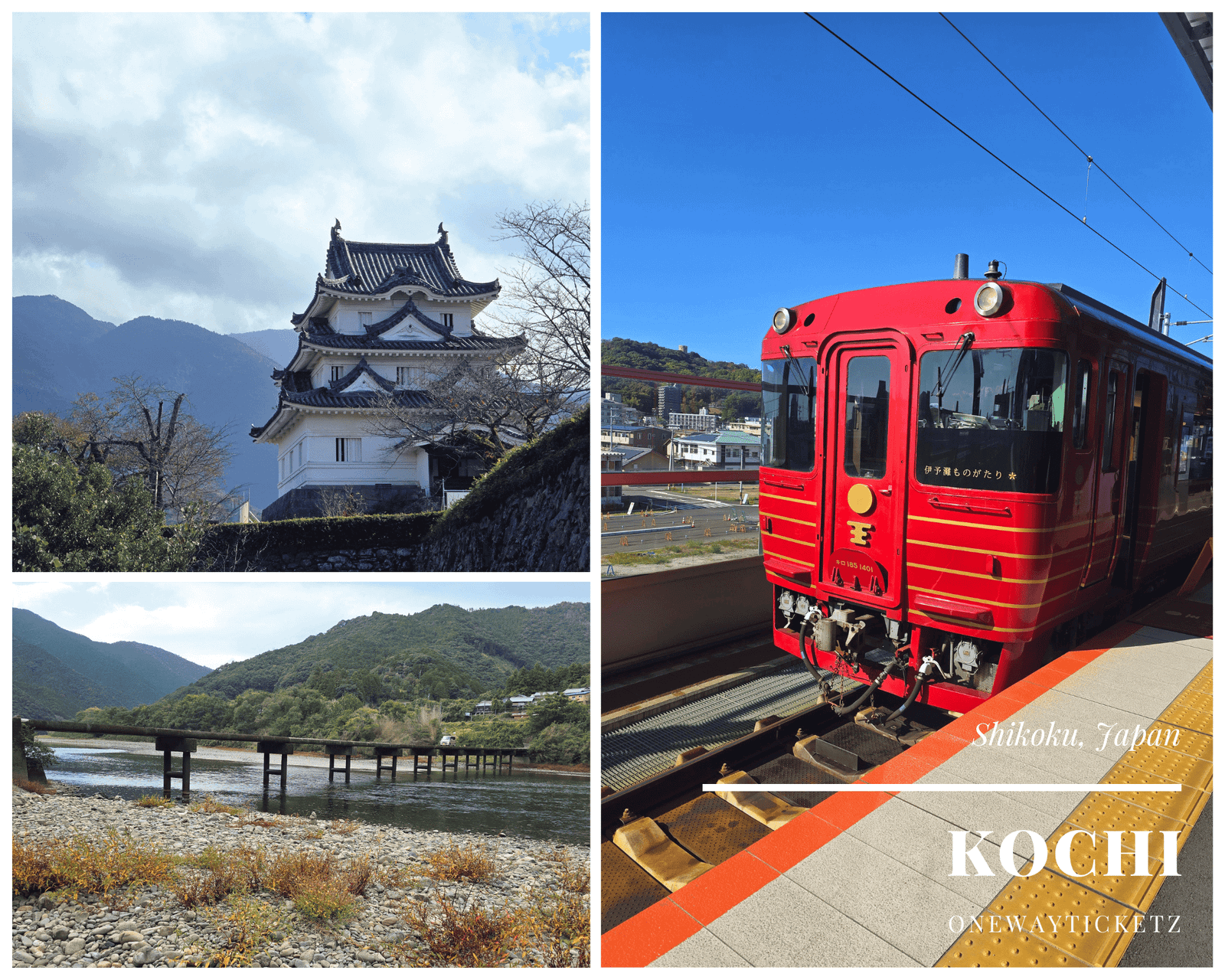
Kochi deserves a spot on your Shikoku itinerary if you love the outdoors and being surrounded in nature.
Located on the island’s southern coast, Kochi is known for its beautiful rivers, rugged coastline, and lush natural landscapes. The Shimanto River is particularly famous for its clear waters, while Kochi Castle is also one of Japan’s few castles that retain their original main keeps. We were lucky to get on one of Japan’s iconic sightseeing train, the Iyonada Monogatari (伊予灘物語). It was such a unique first-hand experience of the Japanese omotenashi.
Kochi also has a lively food culture. Its signature dish is Katsuo no tataki (seared bonito). It is a bonito fish lightly seared over a blazing straw fire. It is also often served with garlic, citrus, and other simple accompaniments. Other interesting options also include the Sawachi Platter, Nabeyaki Ramen, Kinme-don and Shamo Nabe.
For a taste of local life, visit Hirome Market in Kochi City, where food stalls and communal dining make it easy to sample regional favourites.
Tokushima: Traditional Dance, River Valleys and Mountain Scenery
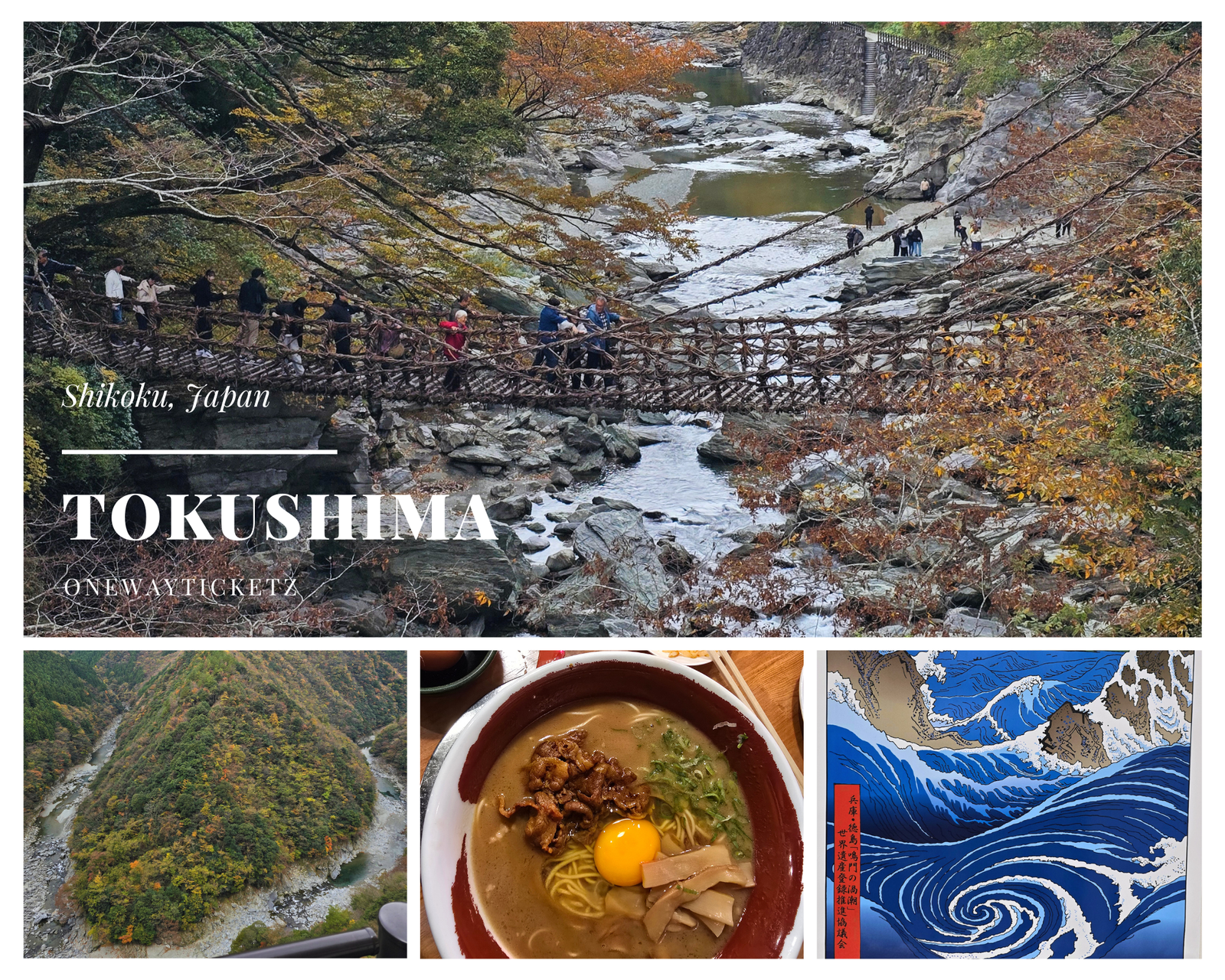
Our Shikoku journey ended in Tokushima, a prefecture known for its vibrant cultural traditions and spectacular natural scenery.
Anyone who loves nature can explore the dramatic Naruto whirlpools, created by powerful tidal currents, or venture into the Iya Valley, known for its deep gorges, forested mountains, and historic vine bridges.
Tokushima is also famous for the Awa Odori dance festival, one of Japan’s best-known traditional dance festivals. Although the main festival takes place in August, visitors can learn about the dance and enjoy performances at Awa Odori Kaikan throughout the year. This might be a spot to add in your itinerary during a summer trip to Japan!
Local specialities include the Tokushima ramen, with its distinctive pork-based broth, and Naruto Kintoki sweet potatoes.
From Tokushima, we made our way back to Hiroshima, bringing our five-week journey through Chugoku and Shikoku full circle.
Final Thoughts: Why Chugoku and Shikoku Deserve a Place on Your Japan Itinerary
Looking back, what made this trip special wasn’t just the beautiful scenery, historic landmarks, or incredible food. It was the feeling of discovering a side of Japan that felt slower, more personal, and deeply connected to local traditions.
Chugoku and Shikoku may not always be the first regions that come to mind when planning a trip to Japan. However, that’s precisely what makes them so rewarding. Beyond the famous attractions, you’ll find small neighbourhood eateries, family-run businesses, regional specialities, and communities that take pride in sharing their local culture.
The warmth of the people we met was easily one of my favourite things about travelling through these regions. Even when we couldn’t speak the same language, locals were often willing to help, share stories, and make us feel welcome. Sometimes, all it took was a smile, a little patience, and Google Translate (or one of your favourite AI translation apps) to bridge the gap!
If you’re looking for a Japan trip that goes beyond the usual tourist trail, I wholeheartedly recommend giving Chugoku and Shikoku a chance.
Come for the landscapes, stay for the food, and leave with stories you never expected to collect.
And this is only the beginning! I’ll be sharing more detailed guides to each prefecture, including places to visit, local food to try, and experiences worth adding to your itinerary.
Next stop: let’s explore Japan, one prefecture at a time.
Happy travels, and see you on the next OneWayTicketz adventure!
